
PC
CONSOLE
[Dev Letter] Blue Zone Revamp
Dev Letter

Hello players,
In this update, we are introducing a Blue Zone Revamp, one of the key systems that shapes the pace and flow of every PUBG match. The Blue Zone is more than just a mechanic that deals damage outside the safe zone. It plays a key role in shaping the battle royale experience by influencing when players move, where they position themselves, and what risks they choose to take.
The current Blue Zone ruleset has remained unchanged since April 2023, with both Normal Matches and Ranked operating under the same overall structure for an extended period of time. During that time, however, player behavior, combat patterns, and survival strategies have continued to evolve. As a result, we felt it was necessary to reevaluate whether the Blue Zone is still fulfilling its intended role within today's gameplay environment.
At its core, the Blue Zone exists to gradually restrict the playable area, encourage player encounters, and reduce the number of survivors over the course of a match. However, it should not pressure players so aggressively that meaningful strategic choices disappear. On the other hand, it should not be so lenient that it reduces the tension and intensity that define the battle royale experience. With this in mind, we have carefully analyzed long-term gameplay data and player feedback to find a balance that supports strategic decision-making while maintaining a healthy match tempo.
Our analysis showed that while the Blue Zone ruleset has remained unchanged, the overall pace of gameplay and combat has become significantly faster over time. We also found that Normal Matches and Ranked have continued to develop gameplay identities, while the existing ruleset no longer fully reflects those differences. Rather than moving both modes toward a single unified ruleset, this update focuses on adjustments tailored to each mode's unique gameplay flow. Time has been redistributed where necessary, while phases that offered excessive downtime have been adjusted to create a healthier overall pacing structure.
In addition to Blue Zone timing adjustments, this revamp also revisits the long-standing Blue Zone damage system. Alongside updates to better align match pacing with today's gameplay meta, we are introducing a new damage model that replaces the existing distance-based scaling system. Going forward, Blue Zone damage will increase based on how long players remain inside the Blue Zone, creating a more intuitive and predictable experience.
The goal of this revamp update is not simply to increase pressure or force faster engagements. Instead, we aim to create a more natural and consistent match flow throughout every stage of a match. By ensuring players have meaningful opportunities to make strategic decisions in each phase, we hope to further strengthen the unique gameplay experiences that define both Normal Matches and Ranked. Below, we'll walk through the analysis behind these changes and the key updates being introduced.
Under the previous Blue Zone structure on Normal Matches, safe zones became smaller while shrink times became shorter as matches progressed. Shorter shrink times meant the Blue Zone closed more quickly, causing movement pressure, combat pressure, and Blue Zone damage pressure to converge during specific stages of the match. Around Phases 5 and 6 in particular, chaotic combat frequently occurred within much smaller play spaces, even when survivor counts were comparable to those seen in Ranked.
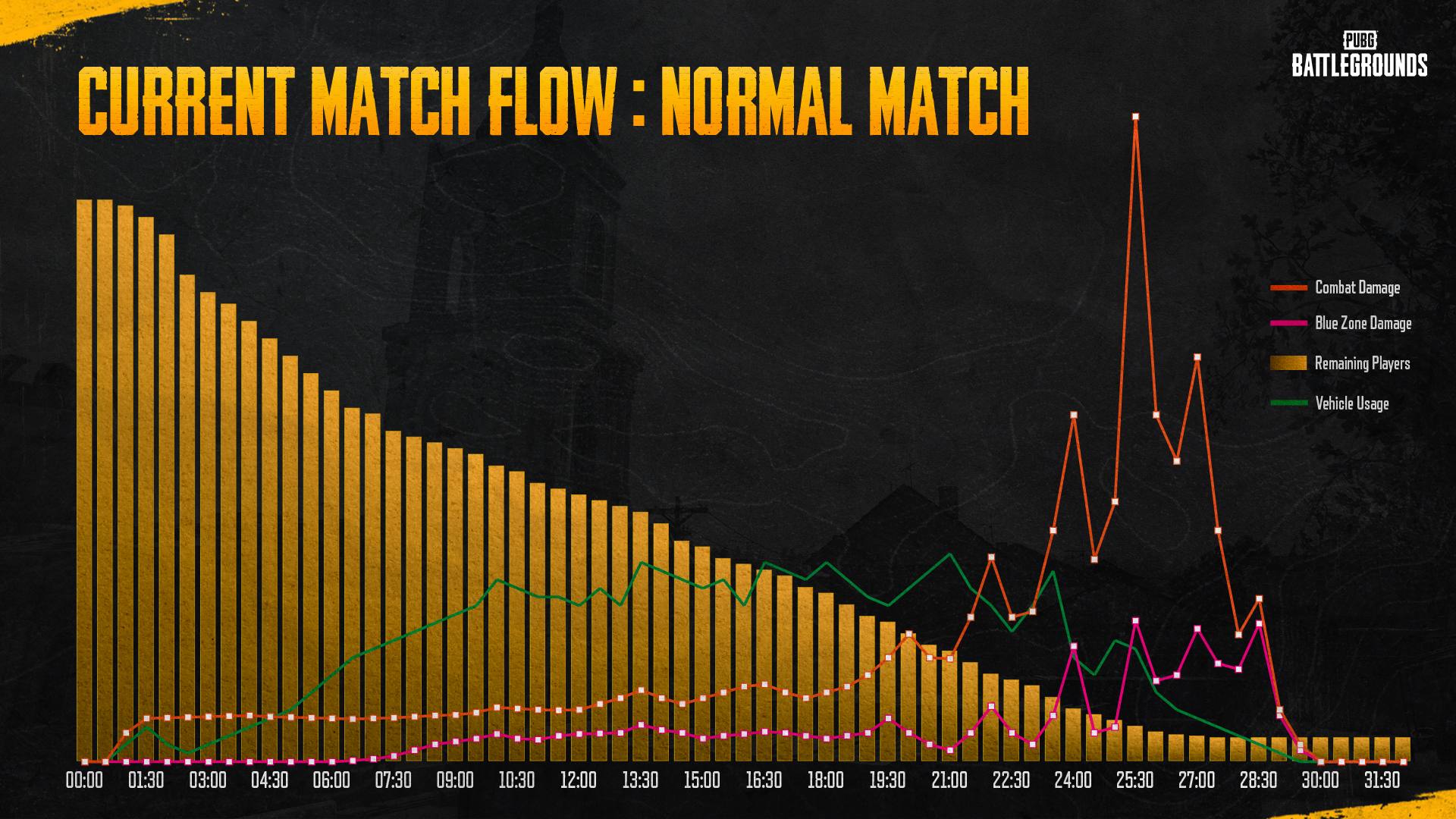
Players generally use warning periods to prepare for movement and engage in combat while the Blue Zone is actively shrinking. However, as matches progress into the later phases, players tend to gather additional information and delay their rotations until just before the Blue Zone begins to move. Within this gameplay pattern, the faster Blue Zone movement speed in Normal Matches often resulted in rushed entries into the safe zone. As a consequence, vehicle dependency remained high into the late game, and multiple teams frequently converged on the same locations, leading to chaotic combats.
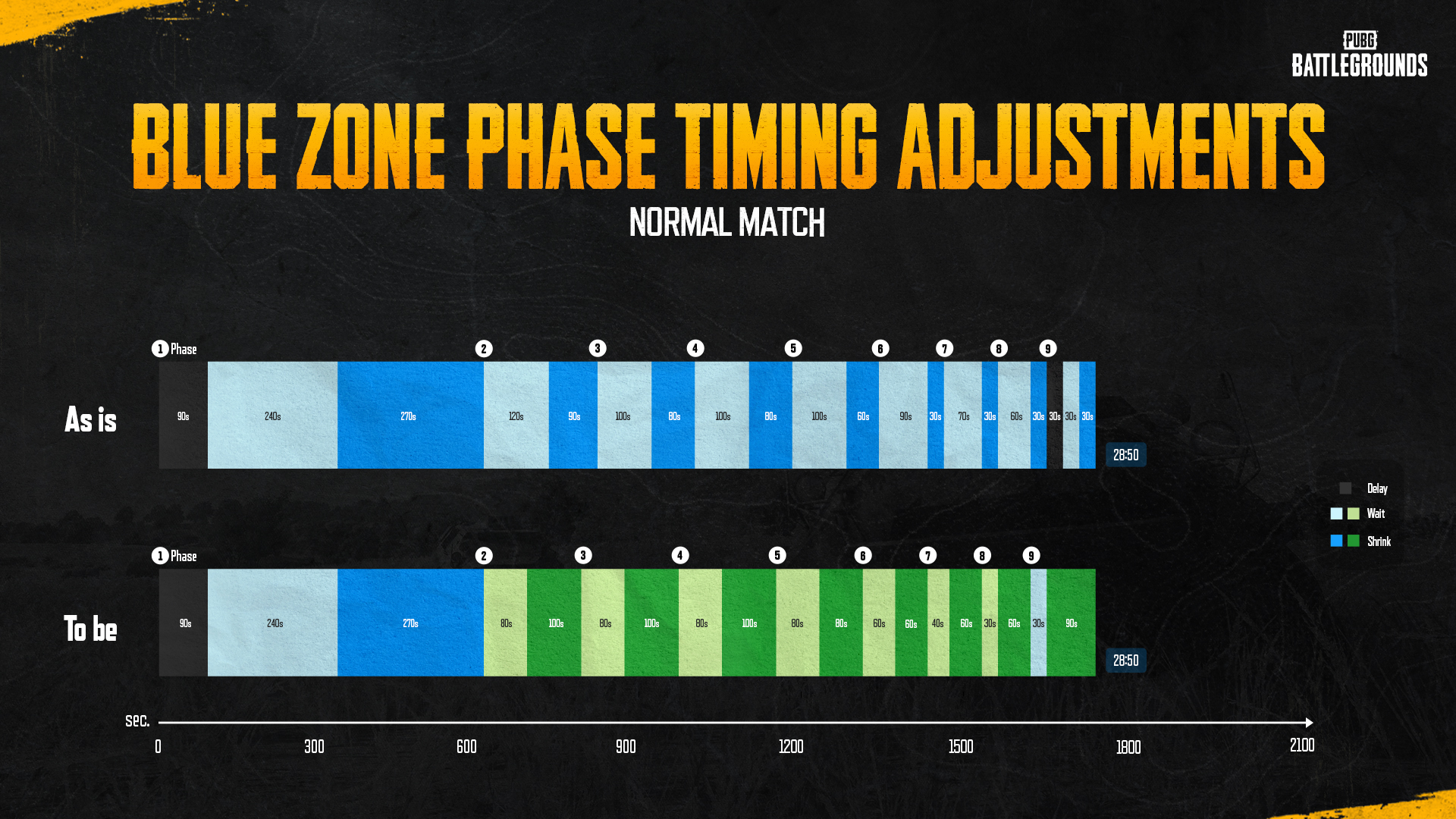
To ease this pressure, we are adjusting the existing structure of longer warning periods and shorter shrink periods. Warning times will be reduced slightly, while shrink times will be extended to slow the overall pace of Blue Zone movement and provide more space for late-game engagements. Through these changes, we aim to create a smoother combat flow and a more stable late-game environment, rather than forcing players into increasingly compressed situations.
Ranked naturally encourages survival-focused gameplay, leading teams to establish positions inside the safe zone early in the match. As a result, we observed periods where match flow could become somewhat stagnant after looting and initial rotations were completed but before meaningful engagements began.
In addition, late-game safe zones tended to remain relatively large, while strong zone-centering adjustments made future circle locations easier to predict. This often resulted in a slower early-game pace and reduced the uncertainty and tension that safe zones are intended to create during the later stages of a match.
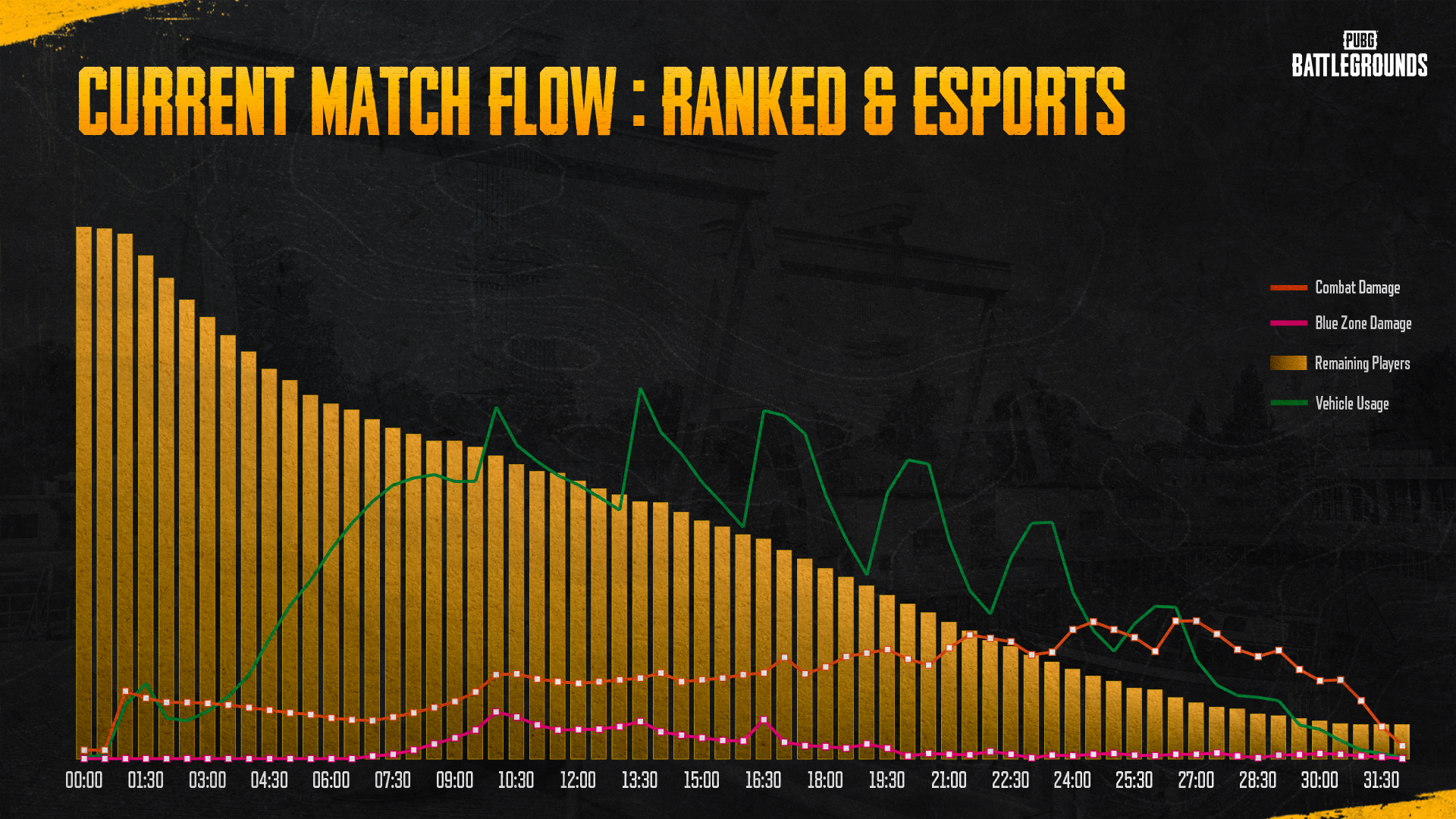
To address these issues, we are adjusting the duration of certain phases to improve the overall pacing of Ranked and Esports matches. We are also reducing the strength of zone-centering adjustments to introduce greater variability in future circle locations. At the same time, competitive integrity remains a top priority. Even with these changes, some zone-centering adjustments will remain in place to ensure that late-game circles continue to form in fair and playable locations.
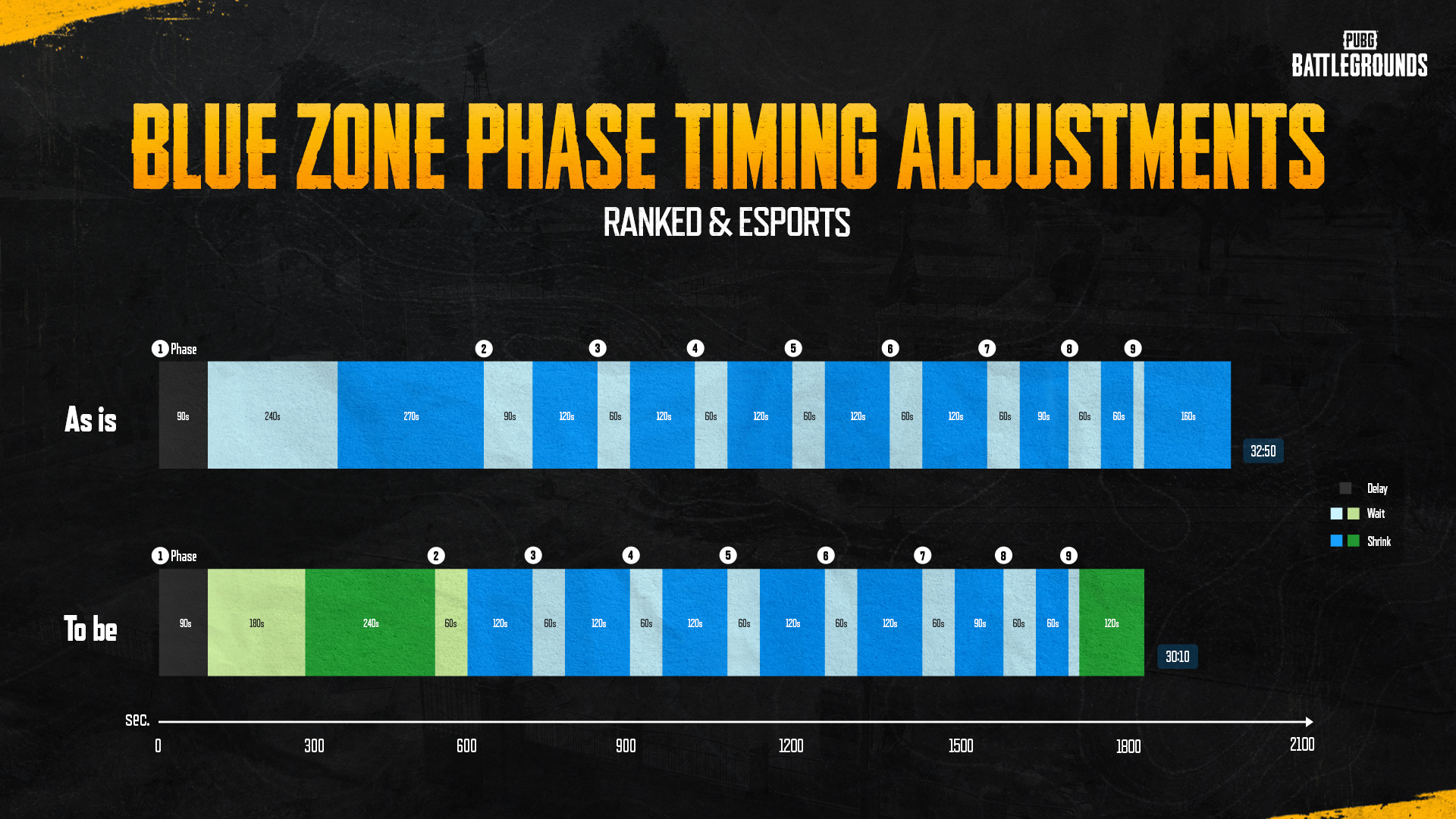
These updates are intended to reduce unnecessary downtime in the early stages of Ranked and Esports while creating more meaningful positional battles and strategic decision-making opportunities in the late game.
Finally, we are updating the way Blue Zone damage increases over the course of a match.
Previously, Blue Zone damage scaled based on a player's distance from the safe zone. While this system was designed to encourage players to remain within the playable area, its impact was largely limited to situations where players were far outside the safe zone. It also made it difficult for players to intuitively understand when and how damage values would increase.
To address these limitations, Blue Zone damage will now scale based on the amount of time spent inside the Blue Zone rather than distance from the safe zone. This change more clearly reinforces the Blue Zone's core purpose of encouraging players to stay within the safe area.
At the same time, players will still be able to make slower rotations into the safe zone during the early stages of a match. However, as the match progresses, the effects of prolonged Blue Zone exposure will become increasingly significant. As a result, strategies that rely on remaining in the Blue Zone for extended periods, such as healing items through the damage while setting up flanking opportunities, will become considerably more difficult.
Because the Blue Zone influences the overall flow of every match, we will continue closely monitoring both gameplay data and player sentiment after these changes go live.
In particular, we will be paying close attention to whether survivor counts progress as intended throughout each phase, whether appropriate player density and engagement distances are maintained within safe zones, whether the pace of movement and combat feels appropriately balanced, and whether players are taking more Blue Zone damage than intended.
Through ongoing analysis, we will evaluate how these changes affect the overall match experience and continue refining the system to ensure the Blue Zone contributes positively to PUBG's gameplay flow.
The Blue Zone is more than a system that restricts playable space. It is one of the key pillars that shapes the rhythm of movement, combat, encounters, and survival throughout a PUBG match. It influences when players move, what risks they choose to take, and how each match unfolds.
This Blue Zone revamp is not intended to limit specific playstyles or simply accelerate gameplay. Rather, it is part of an ongoing effort to ensure the Blue Zone continues to fulfill its intended role as player behavior and gameplay trends evolve. At the same time, we want to further reinforce the unique gameplay identities of both Normal Matches and Ranked.
Going forward, we will continue monitoring the Blue Zone to ensure it remains neither overly predictable nor overly restrictive. We will carefully evaluate the impact of these changes through both data and player feedback and make further adjustments where necessary.
We believe the PUBG battle royale experience continues to evolve alongside the choices, strategies, and playstyles of our players. As the game continues to evolve, we will keep refining and improving the experience to deliver matches that are more tense, fair, and strategically rewarding.
We'll see you in the next Dev Letter.
PUBG: BATTLEGROUNDS Team